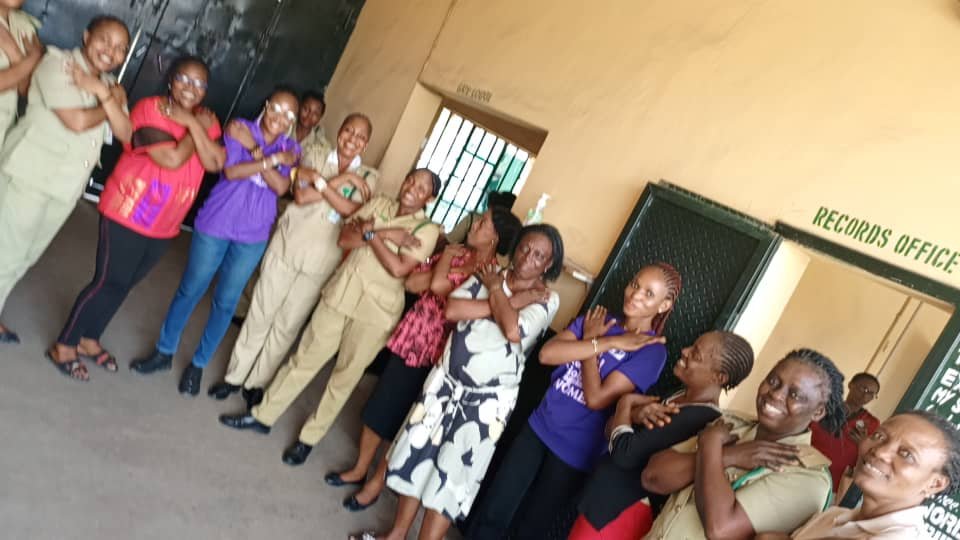
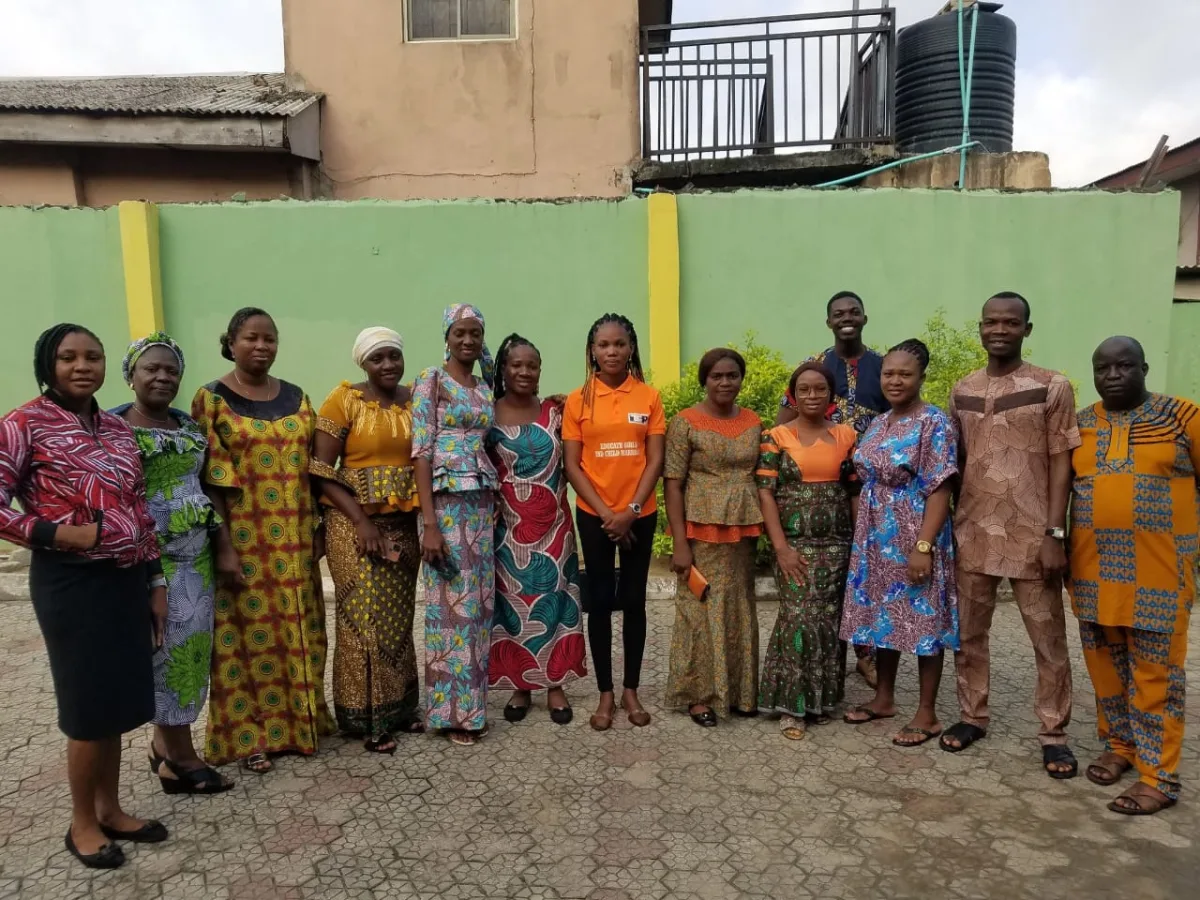
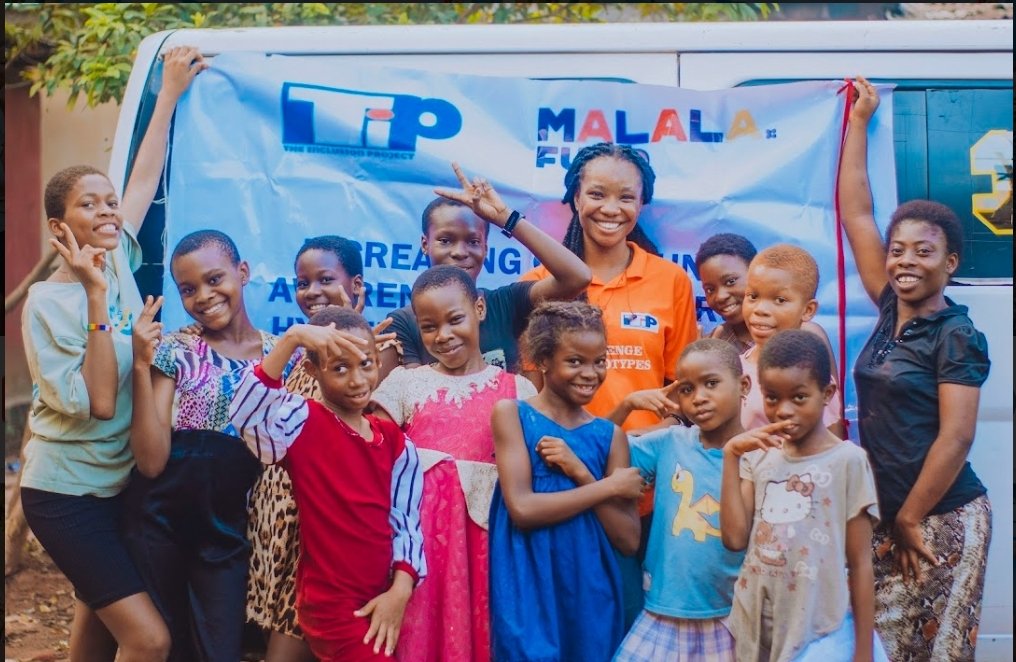
A group of community members standing together beside a banner reading The Inclusion Project: enabling equal opportunities and access to justice for all.

About us

An organisation of lawyers for people the legal system leaves out

We are an organisation of lawyers who believe that a right you cannot enforce is not yet a right.

01

Who we are

The Inclusion Project (TIP) is a legal services provider founded in 2019 and registered as The Inclusion Project in Nigeria. We are a non-governmental organisation of lawyers, established to use the legal system to promote and protect the human rights of the less privileged in Nigeria and, in particular, the rights of vulnerable groups. We use the law as an instrument of justice to provide inclusion for vulnerable groups in Nigeria and ensure the actualisation of the rights guaranteed for all, internationally, nationally and locally.

We work to provide access to justice, rights empowerment, and a wide range of support to the vulnerable and poor communities and individuals in the communities we serve. We serve and work with women, youths, and persons with disabilities, to access, achieve, and assert their fundamental human rights. Through our core programmes, we encourage, mobilise and aid systemic and institutional reforms that recognise and enable equal opportunities and greater access to the enforcement of human rights.

02

Mission

We envision a world without discrimination, bias, and barriers to justice, a world where every voice counts, and the government is accountable and responsible to all.

Vision

  • To use the law to ensure equal opportunities and greater access to justice for women, youths, and persons living with disabilities, and all in Nigeria.
  • To ensure that all voices are heard.
  • To promote institutional and legal reforms that will hold governments at all levels accountable for their actions, including paying adequate compensation and reparations for all violated human rights.

03

Why we care

Nigeria suffers from numerous economic, political and social inequalities and deprivations after several years of military rule and democracy. These inequalities manifest through high poverty, illiteracy and limited access to education, severe human rights violations, and corruption-ridden governments at all tiers.

Many poor Nigerians have their rights violated daily because most cannot afford a lawyer, or lack the awareness or information on where and how to seek or enforce their violated rights. These violations are done with impunity while the legal system and institutions of redress remain largely inaccessible, resulting, by extension, in zero access to justice on each violation. As a result, these people and communities are stripped of the gains of democracy.

The primary cause of this deprivation is inadequate institutional structures, and in most cases none at all, at the levels of government that would understand, protect or enforce these rights. In other cases, the deprivation is occasioned by a total lack of awareness among the vulnerable people whose rights are being violated.

We believe that human rights are universal and should be respected regardless of any one person’s disadvantages.

TIP believes that we can achieve a just and equal society by working with these communities and individuals to ensure that access to justice is attainable. We do this by providing legal remedies and supporting grassroots organisations and movements, so that vulnerable people in smaller communities begin to understand and assert their rights.
04

Our core values

01 Equality
We focus primarily, but not exclusively, on people who are vulnerable and marginalised in society.
02 Reforms
We believe in institutional reforms, laws and best practices that affect the full protection and promotion of the human rights of the communities we serve. We employ a strategic means of engagement to ensure these rights are fully enthroned.
03 Sustainability
We employ strategies and seek long-term outcomes grounded in community and individual ownership, and in change within government institutions.
04 Partnership
We partner with women, youth and persons with disabilities, and with institutions that can bring change to those communities. We employ models that give power back to the people, empowering them to make decisions about their lives and their issues.

05

Our approach

We work by leveraging a mixture of community lawyering, using paralegals and other legal support staff where necessary. This enables us to work effectively through existing community groups, or to help communities create one where none exists.

  1. Litigating

    We litigate public interest issues and provide pro bono legal services for indigents.

  2. Advocating

    We advocate for institutional and legal reforms, including the issues that affect the communities we serve.

  3. Empowering

    We empower women, youths and persons with disabilities by providing legal tools and knowledge.

  4. Agitating

    When necessary, we agitate to get our issues on the table and seek accountability.

What we do

Our programmes

All programmes

Access to Justice

We provide pro bono legal aid to people who cannot access or afford a lawyer: in correctional centres, in magistrates’ courts, and on death row. We also litigate the issues that affect whole communities.

  • Criminal Defence Project
  • CIDT Project
  • Mental Health
  • Public Interest Litigation

Women’s Rights

We work to ensure that violence and discrimination based on sex and disability are eliminated, providing legal services to survivors, engaging communities, and pressing for the laws that protect women to be implemented.

  • Sexual and reproductive rights
  • Sexual and gender-based violence
  • Family and custody matters
  • Menstrual health and dignity

Girls’ Rights and Education

We work to remove the barriers that keep girls out of school and unsafe within it: increasing access to education, promoting menstrual health, creating safe spaces, amplifying girls’ voices and preventing sexual and gender-based violence.

  • School outreach on sexual and gender-based violence
  • Menstrual health and reusable pad training
  • Girls’ Champions Club
  • Media and advocacy participation

Partnership

Who we work with

Our work is carried out alongside funders, civil society organisations and public institutions. Those listed here appear in our own programme records; the list is not exhaustive.

  • Malala Fund

    Supports our girls’ education work in Kano and Imo States, including the justice sector dialogues and the girls’ forums on menstrual hygiene, gender-based violence and education rights.

  • Kano State Government

    Co-convened the Stakeholders Justice Sector Dialogue on the impact of sexual and gender-based violence on girls’ education.

  • Centre for Women’s Health and Information (CEWHIN)

    Partnered with us on the International Women’s Day webinar “Legal Protection Every Woman Should Know”.

  • Nigerian Correctional Service

    Works with us on access to women and girls held in custodial facilities in Lagos, including our menstrual health deliveries.

Get involved

Two ways to make this work possible

We are a small organisation doing work that the people we serve cannot pay for. Time and money both change what we are able to take on.

Fund a legal defence

Your gift pays for the lawyer who stands up for someone who cannot afford one.

Donate

Give your time

Lawyers, programme staff, communicators and designers all have a place in this work.

Volunteer